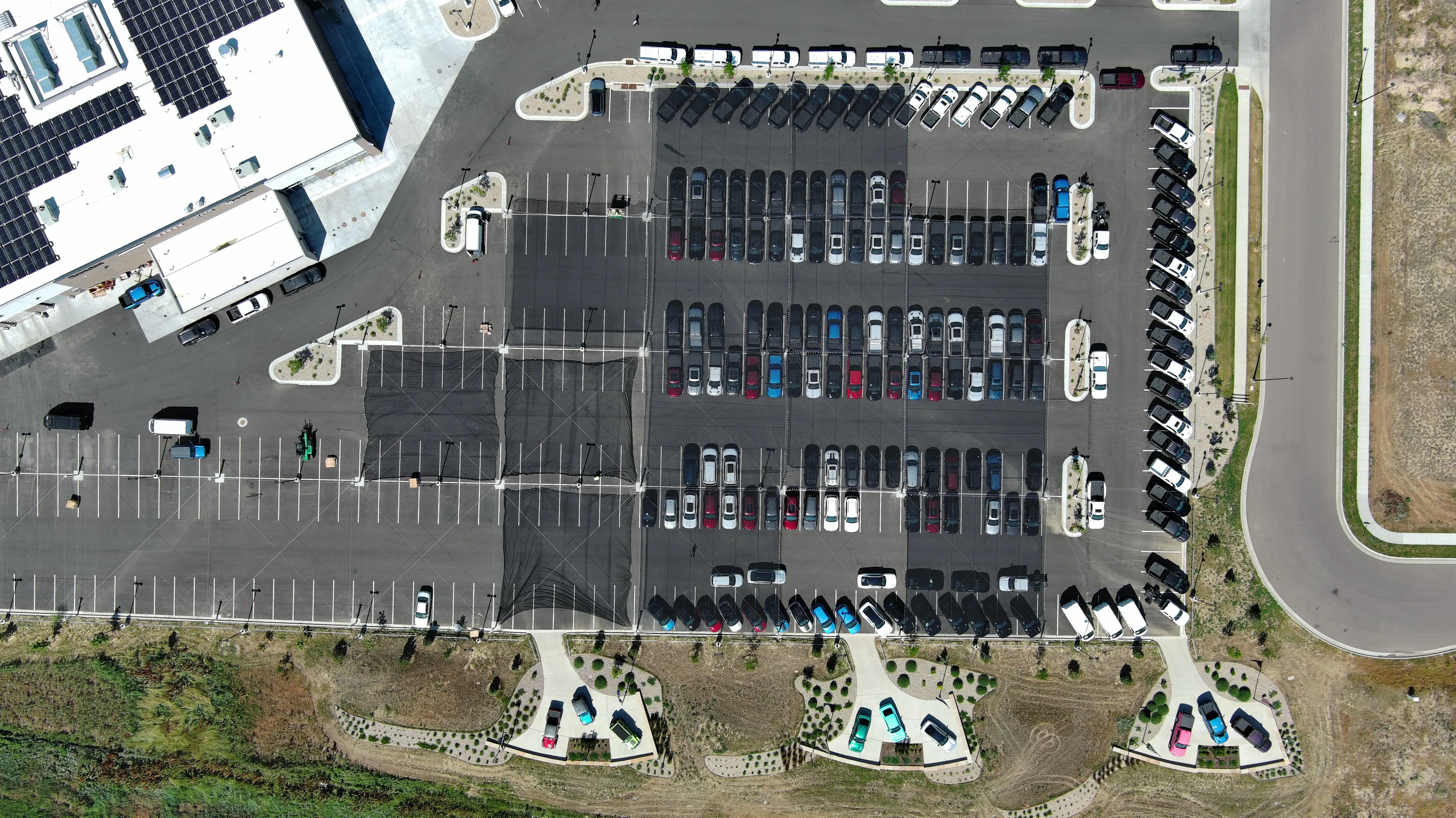
Every year, hailstorms cause billions of dollars in damage—and car dealerships are among the hardest hit. (Source: Insurance Information Institute) With rows of high-value inventory parked in the open, auto dealerships are especially vulnerable to severe weather. As hail season approaches, now is the time to take action to protect your vehicles, reduce insurance risk, and ensure your dealership keeps running without costly interruptions. Here’s how.
When Is Hail Season for Car Dealerships?
Hail season typically runs from March through September, with peak activity in spring and early summer. While these are historically the peak periods for hail, some of the most destructive storms have occurred during off-peak times or late in the season—an increasingly common trend as climate change makes severe weather patterns more unpredictable. Depending on your location, the peak times vary:
- Texas, Oklahoma, Kansas: March–June
- Colorado, Nebraska, Wyoming: April–July
- Midwest & Southeast: May–August
Hail storms are expanding eastward, last year notable storms that damaged car dealerships occurred in states such as Tennessee and Maryland. (Source: Hail No). Dealerships in hail-prone regions should begin planning in late winter, ensuring all protective systems and procedures are in place before storms strike.
Learn More >> Is your dealership in a hail-prone state?
Why Dealerships Are High-Risk Targets
Unlike personal vehicles tucked in garages, dealership inventory is exposed 24/7. This leads to:
- Widespread vehicle damage from a single storm event
- Insurance premium increases—some up to 400% after multiple claims
- Downtime from repairs, delayed sales, and lost revenue
- Brand damage if customer vehicles or test drive inventory are affected
Related Article >> Why Every Car Dealership Needs Hail Protection
6 Steps Dealerships Can Take to Protect Auto Inventory from Hail
1. Invest in Hail Protection Systems
Permanent structures like hail netting systems provide year-round, passive protection without disrupting operations. These systems are:
- Cost-effective: Many dealerships see up to 40% insurance savings. Source: Hail No
- Durable: Engineered to withstand repeated storms
- Customizable: Can be installed over entire lots or high-value zones
- Quick to install: With little downtime for operations
One Hail No® client reduced annual insurance premiums from $1.69 million to $1.02 million—paying off the netting investment in under two years. Source: Hail No
Learn More >> Protecting Auto Dealerships from Hail Damage: A Guide
2. Work with Your Insurance Carrier
Before hail season, review your commercial auto and property policies:
- Confirm your hail damage coverage limits
- Ask whether proactive protection (like hail netting) qualifies for rate discounts
- Document inventory and conditions for faster claims
Related Article >> Can Hail Protection Lower Your Insurance Premiums?
3. Reinforce Emergency Procedures
Train your staff on protocols for severe weather alerts:
- Ensure staff and customer safety plans are clear
- Secure outdoor signage or materials that could become airborne
- Create a post-storm response checklist for inspections and claim documentation
4. Partner with Local Meteorologists or Services
Consider investing in a weather alert service or custom monitoring system that offers:
- Real-time hail warnings
- Risk mapping by lot location
- Predictive modeling for storm activity
5. Perform Lot and Facility Inspections
Before hail season:
- Clear storm drains and gutters
- Secure lightweight or elevated assets
- Review the placement of high-end or at-risk inventory
6. Educate Your Customers
Show that you’re proactive about protecting your inventory:
- Mention your hail protection systems in sales discussions
- Promote it in local advertising to differentiate your dealership
- Reassure customers that your vehicles are stored and sold undamaged
Don’t Wait—The Cost of Doing Nothing Is High
In many regions, severe hail is no longer a rare event. With storms growing in intensity and frequency (Source: NIU Newsroom), hail protection is no longer a nice-to-have—it’s essential. By taking steps now, dealerships can avoid massive losses, keep insurance rates in check, and maintain business continuity.
Even with the right precautions in place, it pays to have a plan for the day a storm actually hits. Our guide to what businesses face and how to recover from hail damage walks through the full response — from the first 24 hours through long-term recovery.

%252520(6).webp)