For parking lot owners and managers, severe weather is more than just a temporary inconvenience—it’s a liability. As hail season becomes longer and storms more intense, the cost of inaction is rising. According to the Insurance Information Institute, hail causes billions of dollars in property and auto damage annually in the U.S. (Source: Insurance Information Institute)
Hailstorms can damage customer vehicles, trigger insurance claims, and hurt your reputation. Fortunately, there are steps you can take now to safeguard your business and reduce insurance risk before the next big storm hits.
When Is Hail Season for Parking Lots?
Hail season typically spans March through September, with most storms occurring in spring and early summer. While this period is historically the peak for hail storms, some of the most destructive weather has occurred during off-peak times or late in the season— this is becoming a more common trend as severe weather patterns are increasingly unpredictable. Risk is highest in areas like:
- Texas, Oklahoma, Kansas, Colorado: March–June
- Nebraska, Missouri, Illinois: April–August
- Mountain West & Central U.S.: April–July
Bear in mind that hail storms are expanding eastward, last year notable storms occurred in states such as Tennessee and Maryland. (Source: Hail No). If your parking lot is in a hail-prone region—or if your location has already seen damage in recent years—it’s time to plan ahead.
Learn More >> Is your lot in a hail-prone state?
Why Parking Lots Are High-Risk
Whether you operate a public lot, a business campus, or a commercial facility, uncovered parking creates real risks:
- Hail-damaged vehicles can lead to lawsuits or tenant complaints
- Insurance liability may fall on the property owner or operator
- Lost revenue if parts of the lot become unusable after a storm
- Reputation damage if customers feel unsafe parking at your location
6 Steps to Protect Your Parking Lot Before Hail Season
1. Install a Hail Protection System
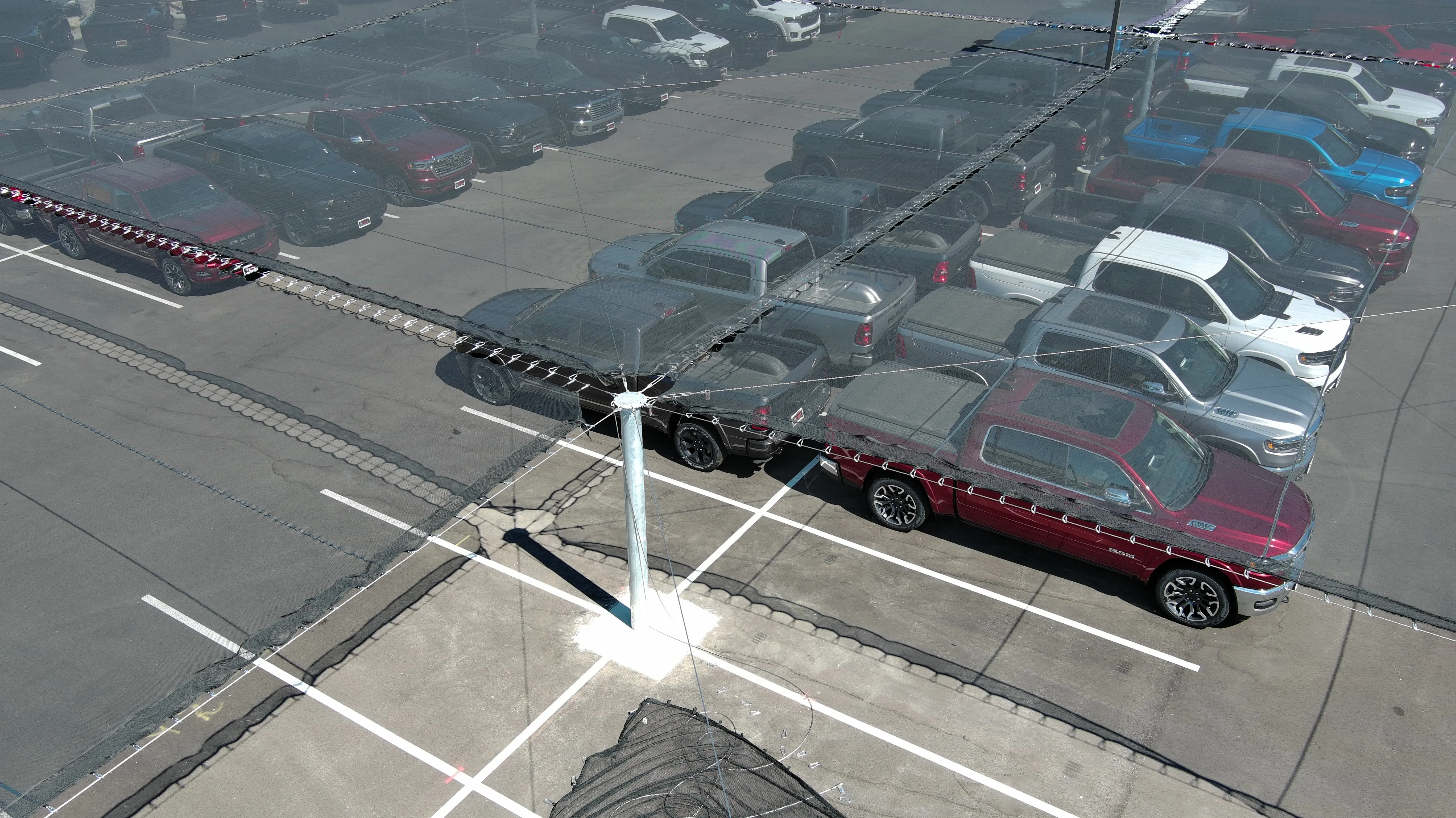
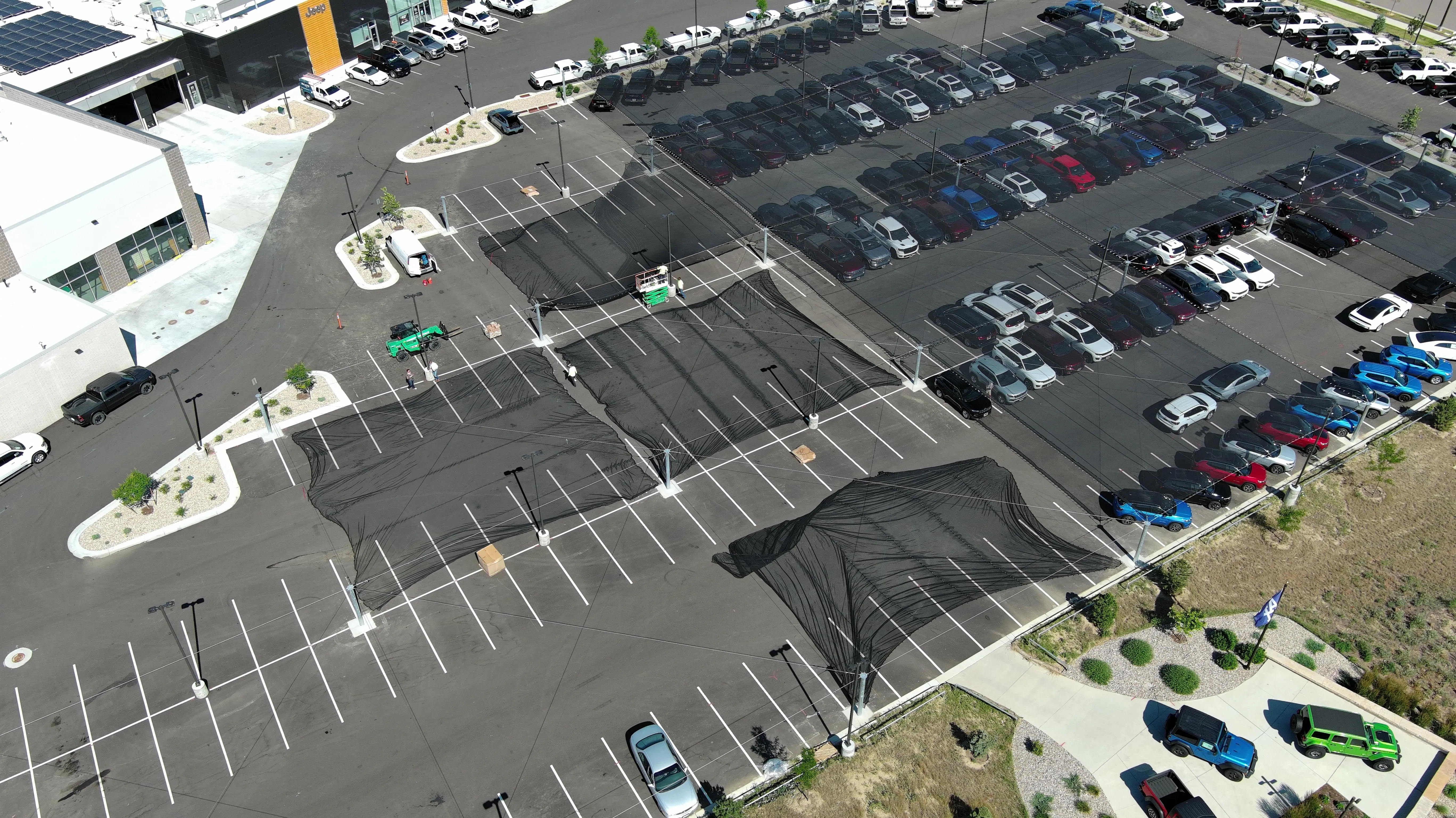
Modern hail netting systems offer lightweight, attractive, and durable coverage options for lots of all sizes:
- Helps prevent damage to parked vehicles
- Low-maintenance and weather-resistant
- Can be custom-built for different lot layouts or surface conditions
- Often qualifies for insurance discounts
Hail No® clients have saved up to 40% on insurance premiums, with many recouping the full investment within two years. Source: Hail No
Learn More >> Protecting Parking Lots from Hail Damage: A Guide
2. Review Property and Liability Insurance Coverage
Before storm season:
- Understand what’s covered (or not) under your liability policy
- Talk to your broker about coverage for parked vehicles and customer claims
- Ask about rate reductions for preventive measures like hail netting
Related Article >> Can Hail Protection Lower Your Insurance Premiums?
3. Inspect Lot Conditions and Drainage
Hail can compound issues with drainage or aging infrastructure. Be sure to:
- Clear gutters, drains, and stormwater systems
- Inspect pavement and surface runoff zones
- Repair any sagging or unstable surfaces before a storm exacerbates damage
4. Post Clear Disclaimers and Storm Policies
While hail protection reduces your exposure, signage and policies still matter:
- Post weather liability disclaimers at lot entrances
- Ensure your team knows how to respond after a weather event
- Keep documentation of vehicle conditions before and after major storms
5. Integrate Weather Alerts into Operations
Consider subscribing to hail alert systems or radar tracking:
- Give staff advance notice to move high-value equipment or coordinate with tenants
- Record hail events for insurance documentation
- Alert visitors or customers via signage or apps when severe weather is imminent
6. Highlight Hail Safety in Marketing
Covered parking isn’t just protection—it’s a selling point:
- Promote hail protection in listings or lease agreements
- Attract tenants, staff, or visitors who value safe vehicle storage
- Differentiate your lot in competitive urban or commercial areas
Passive Protection, Active Value
The right hail protection plan doesn’t just prevent damage—it increases the safety, usability, and marketability of your parking lot. With severe storms on the rise, investing in weather resilience is a smart long-term move for both asset owners and operators.
Preparation is only half the equation. If a storm does hit, our guide to what businesses face and how to recover from hail damage covers the full response process, step by step.